

Up to five. They lead your front page; everything else stays city wide.
You will get a Prime Alert when something breaks in these areas.
The city, and the morning. Back editions are the paper as it stood that day.
Loading the last ten editions…
Banks handling public money must make their online banking systems robust, secure and foolproof, leaving no scope for outsiders or fraudsters to gain control or misuse them, the high court said.
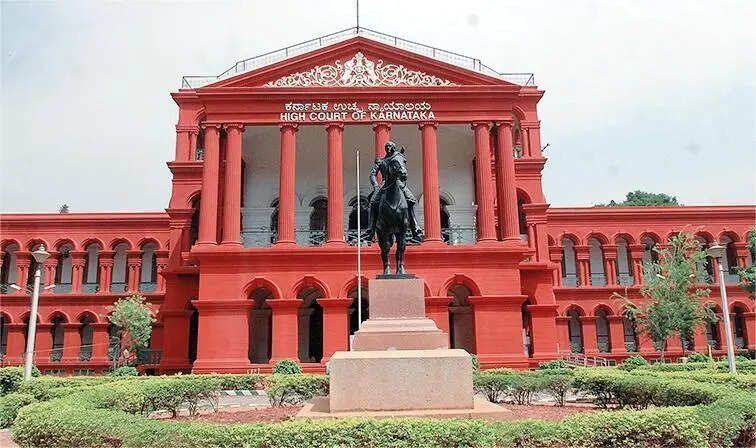
Banks handling public money must make their online banking systems robust, secure and foolproof, leaving no scope for outsiders or fraudsters to gain control or misuse them, the high court said.
The court made the observation on Aug 11 while upholding orders of the Karnataka State Consumer Disputes Redressal Commission and the National Consumer Disputes Redressal Commission in favour of 71-year-old Pradosh Kumar Banerjee, a Bengaluru resident and customer of the State Bank of India.
The court added that money handled by banks is public money, making banks accountable to the public. Any failure, it said, could affect not only individual customers but also the country’s economy and public trust in the banking system.
On July 19, 2022, Banerjee noticed that Rs 1.9 lakh had been fraudulently debited from his account, followed by another debit of Rs 25,000 within three hours. He immediately switched off his mobile phone and informed SBI by email. While the bank credited Rs 25,000 back to his account, the Rs 1.9 lakh was not refunded. Despite repeated requests, the bank failed to re-credit the amount, prompting Banerjee to approach the District Consumer Disputes Redressal Commission.
SBI, in its response, argued that the customer was responsible for sharing the OTP and bank details on the link, which was issued on the date of debit and in view of the guidance issued by Reserve Bank of India.
The bank claimed that Banerjee had informed it too late about the fraudulent transaction and was therefore not entitled to “zero liability” under the RBI circular.
The District Consumer Commission, after considering the material on record, ruled against Banerjee, prompting him to appeal to the State Consumer Commission. On May 26, 2025, the State Commission upheld his claim, noting that he had informed the bank within three hours of discovering the fraudulent transaction. It directed SBI to re-credit ₹1.99 lakh to his account and pay Rs 25,000 as compensation.
SBI approached National Consumer Commission and its appeal was dismissed. Thereafter, the bank approached the high court, reiterating that there was no deficiency of service on its part.
A division bench comprising Justices DK Singh and TM Nadaf noted that both the State and National Consumer Commissions had held the bank liable to reimburse the unauthorisedly debited amount. The court observed that Banerjee had informed the bank within the time prescribed under the RBI circular, and that the money involved belonged to a septuagenarian customer.
The National Commission held that Banerjee had initiated only a Rs 20 payment from his account. However, Rs 25,000 and Rs 1.9 lakh were subsequently debited without him sharing any further OTPs. The commission noted that the online banking software was under the control of a third party and that Banerjee had not shared any OTP for the two disputed transactions.
The division bench observed that merely downloading an application could not be treated as proof of the customer’s complicity. In cases of third-party fraud, it said, a customer cannot be held liable on the assumption that he shared an OTP for transactions that he had not initiated. The court accordingly dismissed SBI’s petition.
Source: The Times of India

Asked once. After this the app never asks you for a city again.
Bengaluru was guessed from your connection. Nothing was set anywhere.
No account. No email. Nothing is shared. Pick your areas later, from You.

The Bengaluru edition, on your home screen.
Two taps in Safari. No App Store, no account.
You are following this story.