

पाँच तक। ये आपके पहले पन्ने की अगुवाई करेंगे; बाक़ी सब पूरे शहर का रहेगा।
इन इलाक़ों में कुछ बड़ा होने पर आपको प्राइम अलर्ट मिलेगा।
शहर, और सुबह। पुराने संस्करण उस दिन का अख़बार हैं, जैसा वह उस दिन था।
पिछले दस संस्करण आ रहे हैं…
Ishan Sinha/TNN
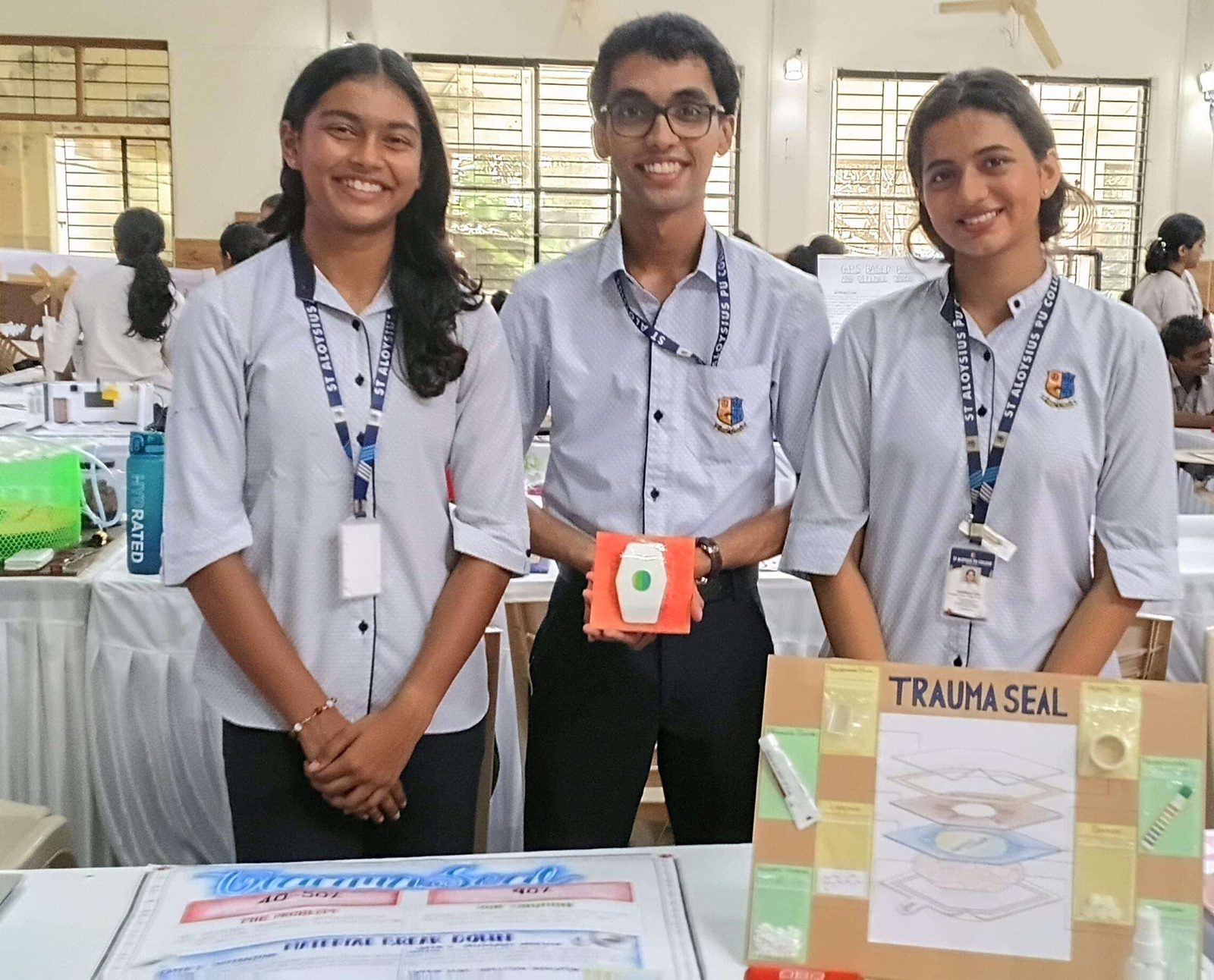
Mangaluru: A smart shoe that alerts people with visual and hearing impairments to obstacles, and a multilayer patch designed to control bleeding and indicate possible infection were among the highlights of two day Genesis Science Exhibition 2026, hosted by St Aloysius PU College that began on Tuesday.
I PU student Sonal Shana Anchan developed ‘Code in the Sole’, an assistive smart shoe built using an Arduino Nano microcontroller, ultrasonic sensors and vibration motors. The sensors detect obstacles, while vibrations alert the wearer to potential hazards.
Sonal demonstrated the prototype by walking blindfolded and wearing headphones playing loud music. As she approached obstacles, the sensors activated the shoe’s vibration alert. She said the initial prototype used a buzzer, but tactile feedback was later incorporated to make it useful for people with visual impairments as well.
The project won first place at the taluk-level and district-level competitions, and was ranked among the top 10 innovations at a state-level competition in Dharwad.
Another project that attracted attention was 'Trauma Seal’, an emergency trauma patch developed by II PU students Ashton Cleavon Pinto, Niharika S Rai, Sakshi Christina Karkada and Abhinav Naveen Shetty.
The six-layer patch has been designed to perform five functions, sealing a wound, accelerating clotting, offering protection, providing pain relief and monitoring possible infection.
A key feature is an infection indicator containing bromothymol blue beneath a transparent window. According to the students, the indicator changes from yellow to blue when the wound’s pH rises above seven, signalling the possibility of bacterial infection.
The prototype uses chitosan to promote clot formation and an alginate hydrogel matrix, derived from seaweed, to retain moisture and absorb excess fluid. It also incorporates a povidone-iodine layer intended to inhibit bacterial growth.
A peripheral ring containing camphor and lidocaine has been positioned around the wound’s edge to offer cooling and local pain relief while limiting direct contact with exposed tissue, the students explained.
Source: The Times of India

एक बार पूछा जाता है। इसके बाद ऐप आपसे शहर कभी नहीं पूछेगा।
Bengaluru आपके कनेक्शन से अंदाज़ा लगाया गया है। कहीं कुछ सेट नहीं हुआ।
कोई खाता नहीं। कोई ईमेल नहीं। कुछ साझा नहीं होता। इलाक़े बाद में, आप से चुन लें।

Bengaluru संस्करण, आपकी होम स्क्रीन पर।
सफ़ारी में दो टैप। न ऐप स्टोर, न खाता।
आप इस ख़बर को फ़ॉलो कर रहे हैं।